Film Publications
Current Film Research: Tentatively titled “German Film History in the Age of Media Convergence,” the book project continues a long-standing interest in what used to be called film and the other arts.Through a series of case studies, the book rewrites German film history from the perspective of media convergence and, through its historical manifestations, considers the theoretical implications for film history and media archeology (intermediality, multimediality, adaptation). Individual chapters deal with theater in early silent cinema, architecture in the expressionist film, sound and voice in the early music film, dance in the West German revue film, DEFA and the opera film, as well as the interconnections among film, radio and television and, closely related, and the contribution of German media theory. Early versions of chapters have been published in the following journals:
Beschreibung auf Deutsch lesen…
Aktuelle Filmforschung: Unter dem vorläufigen Titel „Deutsche Filmgeschichte im Zeitalter der Medienkonvergenz“ führt das Buchprojekt ein langjähriges Interesse an dem fort, was früher Film und die anderen Künste genannt wurde. Durch eine Reihe von Fallstudien schreibt das Buch die deutsche Filmgeschichte aus der Perspektive der Medienkonvergenz um und analysiert anhand ihrer historischen Artikulationen die theoretischen Implikationen für Filmgeschichte und Medienarchäologie (Intermedialität, Multimedialität, Adaption). Einzelne Kapitel behandeln das Theater im frühen Stummfilm, die Architektur im expressionistischen Film, Ton und Stimme im frühen Musikfilm, den Tanz im westdeutschen Revuefilm, der DEFA und dem Opernfilm sowie Kapitel über die Verflechtungen von Film und Radio und Fernsehen und, eng damit verbunden, der Beitrag der deutschen Medientheorie. Frühe Versionen der Kapitel wurden in den folgenden Zeitschriften veröffentlicht:
• “Walter Felsenstein and the DEFA Opera Film,” in Reimagining DEFA: East German Cinema in National and Transnational Contexts, ed. by Seán Allan and Sebastian Heiduschke, 191–209. New York: Berghahn, 2016.
• “The Münchhausen Complex: From Adaptation to Intermediality,” ILCEA (Revue de l’Institut des langues et cultures d’Europe et d’Amérique 23 (July 2015): 1–13. Online
• “Colorful Worlds: The West German Revue Film of the 1950s,” in The Cosmopolitan Screen: Germany and the Global Imaginary, 1945 to the Present, ed. by Lutz Koepnick and Stephan Schindler, 58–76. Ann Arbor: University of Michigan Press, 2007.
• “Provocations of the Disembodied Voice: Song and the Transition to Sound in Berger’s Day and Night,” in Peripheral Visions: The Hidden Stages of Weimar Cinema, ed. by Ken Calhoon, 55–72. Detroit: Wayne State University Press, 2001.
Monographs / Monografien:
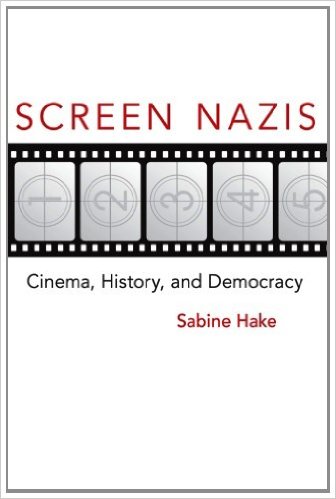
Screen Nazis: Cinema, History, and Democracy. Madison: University of Wisconsin Press, 2012. 308 pp. Link
This book seeks to make sense of the enduring fascination over eighty years with fascism as a transnational cinematic phenomenon. As will be argued, “screen Nazis” function not only as an embodiment of evil but also as a personification of the growing frustrations with liberal democracy and the enduring attractions of authoritarianism. With chapters on the Hollywood anti-Nazi film, the East German antifascist film, the West German resistance film, the Italian Naziploitation film, and the recent European heritage cinema about the Nazi occupation.
Beschreibung auf Deutsch lesen…
Dieses Buch versucht, die über achtzig Jahre andauernde Faszination für den Faschismus als transnationales filmisches Phänomen zu verstehen. „Leinwand-Nazis“, so das Argument, fungieren nicht nicht nur als Verkörperung des Bösen, sondern auch als Personifizierung der wachsenden Frustration mit liberaler Demokratie und der Anziehungskraft des Autoritarismus. Mit Kapiteln über Hollywood-Anti-Nazi-Filme, die antifaschistischen Filme der DEFA, den westdeutschen Widerstandsfilm, den italienischen Naziploitation-Film und das aktuelle europäische Heritage-Kino über die nationalsozialistische Besatzung.
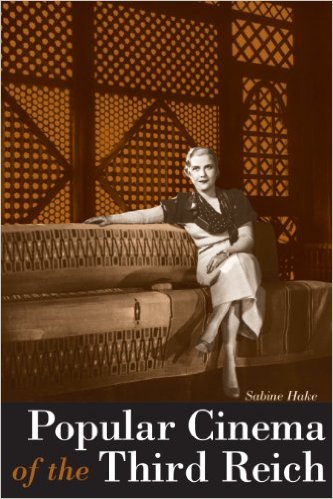
Popular Cinema of the Third Reich. Austin: University of Texas Press, 2001. 272 pp. Link
The book offers an alternative to standard accounts of Nazi cinema as either mass manipulation or escapist entertainment. The configurations of the popular and the political are traced in case studies on the last German-Jewish filmmakers, the melodramatic aesthetic of Detlef Sierck, the mass appeal of Heinz Rühmann as embodiment of “the little man,” the academic study of film audience and spectatorship, German-American film relations after 1933, working women in wartime cinema, and the representation of Goebbels’s UFA in postwar films.
Beschreibung auf Deutsch lesen…
Eine kritische Alternative zu Standarddarstellungen des Nazi-Kinos als Massenmanipulation oder eskapistische Unterhaltung. Die Konfigurationen des Populären und Politischen werden in Fallstudien zu den letzten deutsch-jüdischen Filmemachern, der melodramatischen Ästhetik von Detlef Sierck, der Popularität von Heinz Rühmann als Verkörperung des „kleinen Mannes“, der wissenschaftlichen Untersuchung von Filmpublikum und -rezeption, dem deutsch-amerikanischen Filmhandel nach 1933, berufstätiger Frauen im Film der Kriegsjahre, und die Darstellung der Ufa unter Goebbels im Nachkriegsfilm.
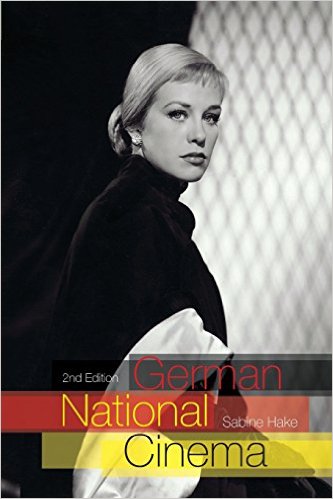
German National Cinema. Revised and enlarged second edition. London: Routledge, 2008. 269 pp. First published in 2002. Translated into German as Film in Deutschland: Geschichte und Geschichten ab 1895. Reinbek: Rowohlt (rowohlts deutsche enzyklopädie), 2004, 576 pp. Translated into Japanese in 2010 by Choeisha Tokyo. Link
The first comprehensive English-language history of German film from the Wilhelmine Empire to the Berlin Republic. Films are examined in their economic, social, political, and cultural functions and their precarious position between art, entertainment, and propaganda. Individual chapters show the centrality of genre cinema and the star phenomenon to questions of national identity but also highlight the cross-cultural influences that situate German films within the European tradition and in ongoing dialogue with Hollywood.
Beschreibung auf Deutsch lesen…
Die erste umfassende englischsprachige Geschichte des deutschen Films vom Kaiserreich bis zur Berliner Republik. Filme werden in ihren wirtschaftlichen, sozialen, politischen und kulturellen Funktionen und ihren komplizierten Position zwischen Kunst, Unterhaltung und Propaganda untersucht. Einzelne Kapitel zeigen die zentrale Bedeutung des Genrekinos und des Starphänomens für Fragen der nationalen Identität, beleuchten aber auch die interkulturellen Einflüsse, die den deutschen Film in der europäischen Tradition und im ständigen Dialog mit Hollywood verorten.

The Cinema’s Third Machine: German Writings on Film 1907-1933. Lincoln and London: University of Nebraska Press, 1993. 352 pp. Winner of the 1993 German Studies Association/DAAD Book Prize. Link
A historical overview of the discourses and debates that accompanied the emergence of film as culture industry, popular entertainment, and political weapon. With chapters on the early cinema reform movement, the literary debates on cinema, the beginning of film criticism and film philosophy, and the classical film theory associated with Béla Balász, Siegfried Kracauer, and Rudolf Arnheim.
Beschreibung auf Deutsch lesen…
Ein historischer Überblick über die Diskurse und Debatten, die die Entstehung des Films als Kulturindustrie, populäre Unterhaltung und politische Waffe begleiteten. Mit Kapiteln über die frühe Kinoreformbewegung, die sogenannte Kinodebatte, den Beginn der Filmkritik und der Filmphilosophie sowie die klassische Filmtheorie von Béla Balász, Siegfried Kracauer und Rudolf Arnheim.
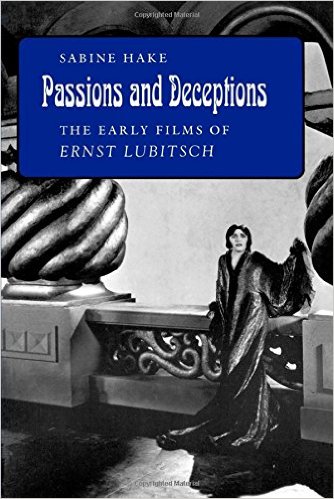
Passions and Deceptions: The Early Films of Ernst Lubitsch. Princeton: Princeton University Press, 1992. 215 pp. Link
The first English-language monograph that traces the making of the “Lubitsch touch” from the early slapstick comedies and spectacular period films of the 1910s to the Warner drawing room comedies of the 1920ss and the film operettas of the early 1930s. Topics to be addressed include film authorship and the making of genre cinema, strategies of translation and adaptation across the transatlantic divide, and the filmic conception of irony, satire, and self-reflexivity.
Beschreibung auf Deutsch lesen…
Die erste englischsprachige Monografie, die die Entstehung des „Lubitsch Touch“ von den frühen Slapstick-Komödien und spektakulären Historienfilmen der 1910er Jahre bis zu den Warner-Salonkomödien der 1920er Jahre und den Filmoperetten der frühen 1930er Jahre nachzeichnet. Zu den behandelten Themen gehören Filmautorenschaft und die Entstehung des Genrekinos, Strategien der transatlantischen Übersetzung und Adaption und Übersetzung sowie die filmische Konzeption von Ironie, Satire und Selbstreflexivität.
Edited Volumes:
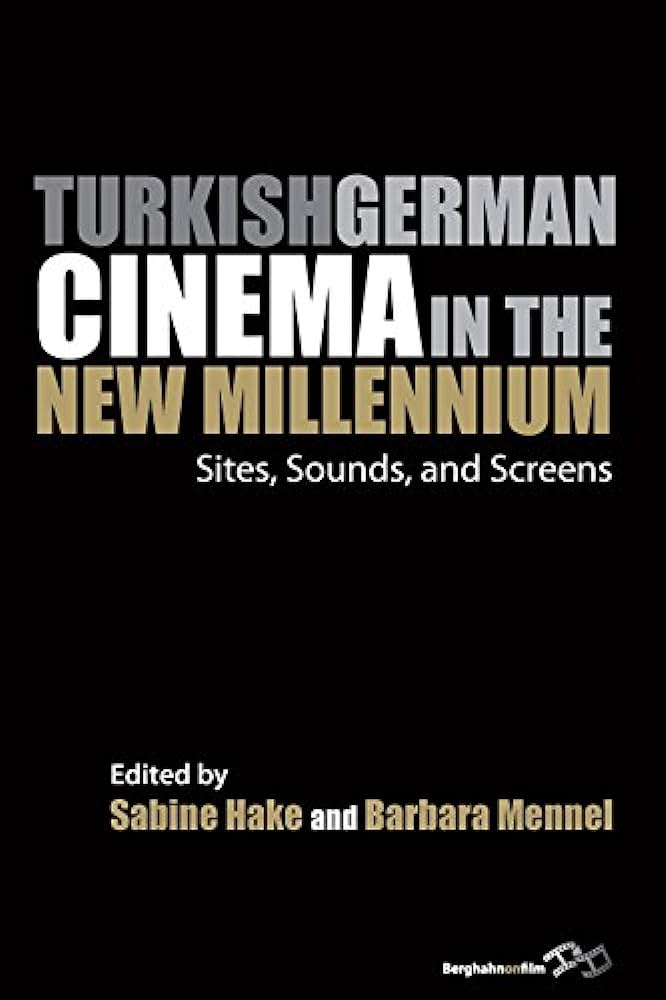
Turkish German Cinema in the New Millennium: Sites, Sounds, and Screens. Co-edited with Barbara Mennel. New York: Berghahn, 2012. 250 pp.
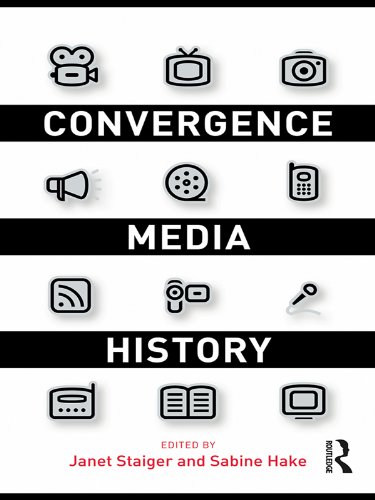
Convergence Media History. Co-edited with Janet Staiger. London: Routledge, 2009. 224 pp.
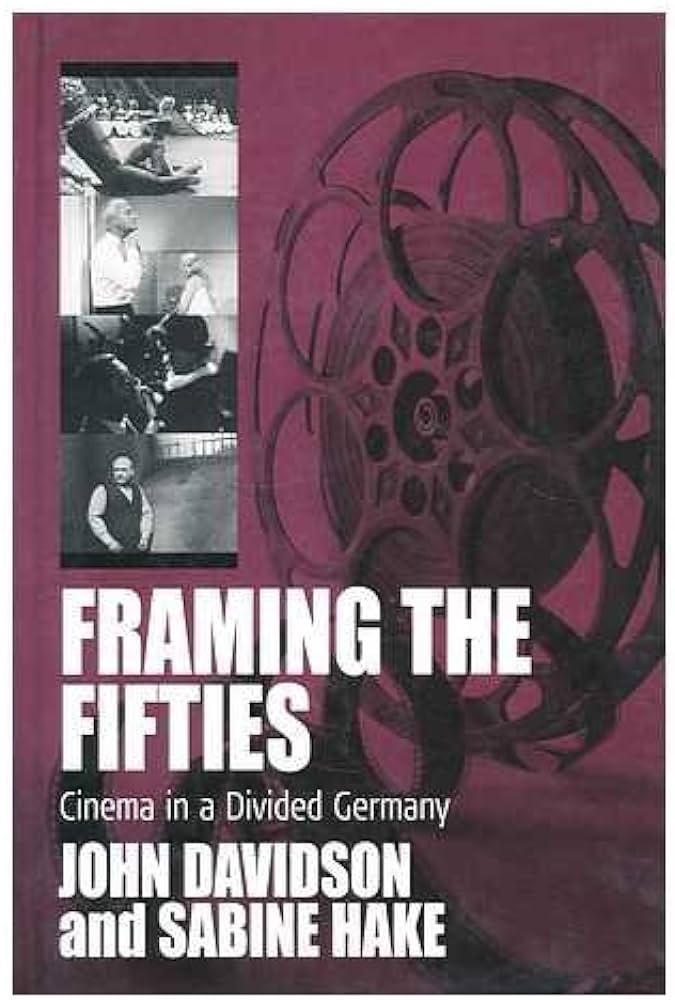
Framing the Fifties: Cinema in a Divided Germany. Co-edited with John Davidson. New York: Berghahn, 2007. 250 pp.
 Sabine Hake