Proletarian Dream Project
Working Class Culture and the History of Socialisms: The Proletarian Dream Trilogy
The three-volume book project presents more than a hundred years of cultural texts and practices produced in the name of the proletariat and identified with the (male) worker as the personification of class struggle or, alternatively, the idea of the people or community. Neither a history of the German working class nor of socialism/communism, the individual case studies are concerned above all with the various (i.e., utopian, anticipatory, and compensatory) functions of the figure of the worker in giving rise to new images and stories of the people, whether in conjunction with Marxist conceptions of the working class as revolutionary class or National Socialist ideas about race and folk community. These connections are examined through a combination of thematic analysis, discourse analysis, and formal analysis; interdisciplinarity and multimediality are essential to the choice of examples and approach to the material. The Proletarian Dream (2017) reconstructs the making of the proletarian dream, its debts to Marxism, Social Democracy, and bourgeois culture, from the pre-Wilhelmine years to the end of the Weimar Republic. The Nazi Worker (2023) traces the shift from class to race as the new site of collective identifications through the discourse of Arbeitertum, a shift made possible through the convergence of nationalist, socialist, and populist perspectives. The third volume examines the competing images and stories organized through the figure of the worker in East and West Germany, including through their very different responses to the legacies of National Socialism and the specter of a postindustrial society. As indicated by the subtitle, Socialism, Culture, and Emotion, these connections are examined through the focus on the politics of emotion, the culture of populism, and current debates on the end of class and the future of work.
An important purpose of the entire project is to make available for future inquiries a rarely studied and largely unknown archive of proletarian dreams and desires. This imaginary archive includes workers’ autobiographies and memoirs by party leaders; worker’s plays, songs, poems, and novels; images of workers in art, photography, and film; socialist debates about naturalism, modernism, and socialist realism; as well as Social Democratic, Communist, and National Socialist literary theories, cultural initiatives, and art organizations. The goal is not to establish a new “proletarian” canon of writers, artists, and thinkers but to reconstruct the continuities between socialism, nationalism, and populism in the history of modern mass mobilizations—and do so through the fantasies projected onto the worker and the work. Rather than assuming a direct relationship between working-class realities and the symbolic function of the worker, individual chapters focus on the generative function of culture in defining what it meant—and, even more important, how it felt—to claim the designation “worker” or “proletarian” with pride, hope, and faith. Informed by very contemporary concerns, the rediscovery and reassessment of this forgotten proletarian archive is also undertaken to show the relevance of working-class culture to modern German history, culture, and society and to open up a new perspective from which to analyze the contemporary culture of capitalism, nationalism, and populism.
Beschreibung auf Deutsch lesen…
Arbeiterkultur und Geschichte(n) des Sozialismus: Die „Traum des Proletariats“ Trilogie
Das dreibändige Buchprojekt untersucht kulturelle Texte und Praktiken, die über mehr als hundert Jahre im Namen des Proletariats entstanden sind und den (männlichen) Arbeiter als Personifizierung des Klassenkampfes oder, alternativ, der Idee von Volk oder Gemeinschaft konstituieren. In den Fallstudien geht es weder um eine Geschichte der deutschen Arbeiterklasse noch des Sozialismus/ Kommunismus, sondern um die unterschiedlichen (d. h. utopischen, antizipatorischen und kompensatorischen) Funktionen der Figur des Arbeiters bei der Erschaffung neuer Bilder und Geschichten von Gemeinschaft, sei es in Verbindung mit marxistischen Vorstellungen von der Arbeiterklasse als revolutionärer Klasse oder nationalsozialistischen Ideen über Rasse und Volksgemeinschaft. Diese Zusammenhänge werden durch eine Kombination aus thematischer Analyse, Diskursanalyse und formaler Analyse untersucht; Interdisziplinarität und Multimedialität sind für die Auswahl der Beispiele und den Umgang mit dem Material von wesentlicher Bedeutung. The Proletarian Dream (2017) rekonstruiert die Entstehung des proletarischen Traums und seine Wurzen in Marxismus, Sozialdemokratie und bürgerlicher Kultur von der vorwilhelminischen Zeit bis zum Ende der Weimarer Republik. The Nazi Worker (2023) dokumentiert die Übertragung des Klassen- in den Rassenbegriff als neuen Ort kollektiver Identifikationen–möglich gemacht durch die Konvergenz nationalistischer, sozialistischer und populistischer Positionen im Begriff des Arbeitertums. Der dritte Band untersucht die konkurrierenden Bilder und Geschichten, die durch die Figur des Arbeiters im geteilten Deutschland der fünfziger Jahre organisiert wurden, auch in Bezug auf den sehr unterschiedlichen Umgang mit dem Erbe des Nationalsozialismus und dem Kommen einer postindustriellen Gesellschaft. Wie der Untertitel „Sozialismus, Kultur und Emotionen“ andeutet, werden diese Zusammenhänge durch die Fokussierung auf die Politik der Emotionen, die Kultur des Populismus sowie aktuelle Debatten die Aktualität des Klassenbegriffs und die Zukunft der Arbeit untersucht.
Ein zentrales Anliegen des gesamten Projekts ist es, ein kaum erforschtes und weitgehend unbekanntes Archiv von proletarischen Träumen und Wünschen für die zukünftige Forschung verfügbar zu machen. Dieses imaginäre Archiv besteht aus Arbeiterautobiografien und Memoiren von führenden Politikern; Beispiele des Arbeitertheaters, Arbeiterlieds und Arbeitergedichts; Bilder von Arbeitern in Kunst, Fotografie und Film; sozialistische Debatten über Naturalismus, Modernismus und sozialistischen Realismus; sowie sozialdemokratische, kommunistische und nationalsozialistische Literaturtheorien, Kulturinitiativen und Kunstorganisationen. Das Ziel besteht nicht darin, einen neuen „proletarischen“ Kanon von Schriftstellern, Künstlern und Denkern zu etablieren, sondern die Kontinuitäten zwischen Sozialismus, Nationalismus und Populismus in der Geschichte moderner Massenmobilisierungen zu rekonstruieren – und zwar anhand der auf den Arbeiter und die Arbeit projizierten Fantasien. Statt einen direkten Zusammenhang zwischen den Lebensbedingungen der Arbeiter und der symbolischen Funktion des Arbeiters anzunehmen, konzentrieren sich einzelne Kapitel darauf, was es bedeutete – und, noch wichtiger, wie es sich anfühlte – die Bezeichnung „Arbeiter“ oder „Proletarier“ mit Stolz, Hoffnung und Glauben für sich zu reklamieren. Letztendlich dienen die Wiederentdeckung und Neubewertung dieses vergessenen proletarischen Archivs auch ganz aktuellen Zwecken: nämlich die Relevanz der Arbeiterkultur für die moderne deutsche Geschichte, Kultur und Gesellschaft aufzuzeigen und eine neue Perspektive auf die zeitgenössische Kultur des Kapitalismus, Nationalismus und Populismus zu eröffnen.
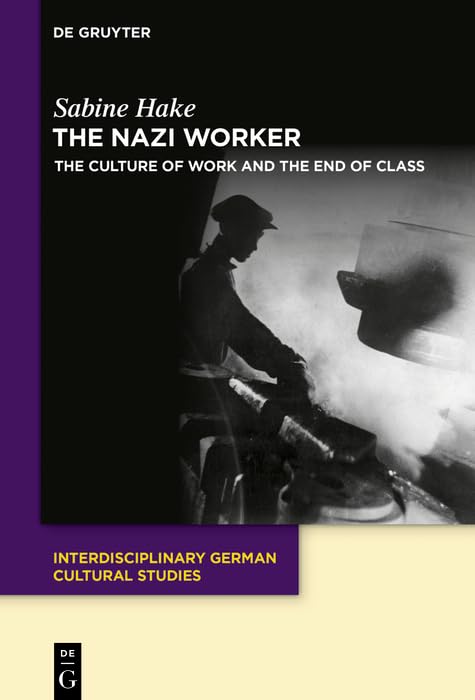
The Nazi Worker: The Culture of Work and the End of Class. Berlin: De Gruyter, 2023. xii, 232 pp, with ills. Link
Earlier and shorter versions of three chapters have appeared in the following journals:
• “Add, Delete, Replace: The Revisionist Project of Workers’ Poetry,” Germanic Review 96.1 (2021): 67–86.
• “From Proletariat to Workerdom, in the Name of the People,” New German Critique 142 (2021): 125–152.
• “Workers, Work, and the Thingspiel,” special issue on “Produktionswelten der Massenkultur,” Geschichte und Gesellschaft. Zeitschrift für historische Sozialwissenschaft 46.1 (2020): 155–178.
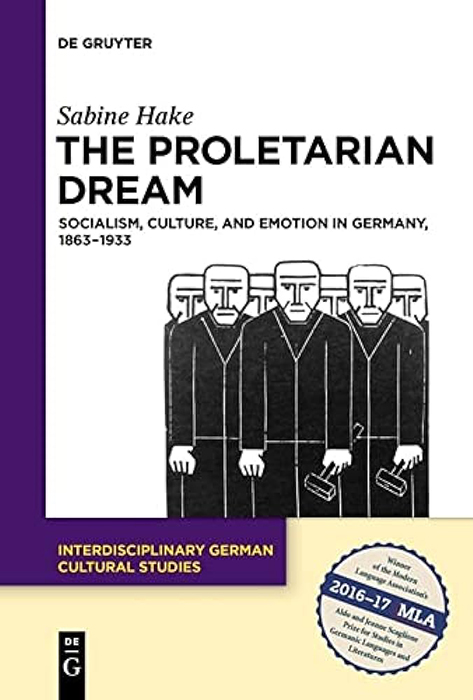
The Proletarian Dream: Socialism, Culture, and Emotion in Germany, 1863–1933. Berlin: De Gruyter, 2017. 410 pp. Paperback second edition in 2018. Recipient of MLA Aldo and Jeanne Scaglione Prize for Studies in Germanic Languages and Literatures. Link
Revised versions of two chapters have appeared in the following journals:
• “Ferdinand Lassalle, the First Socialist Celebrity,” Memoria e Ricerca, Rivista di Storia Contemporanea 29.67 (2021): 261–278.
• “Proletarian Modernism and the Politics of Emotion: On Franz Wilhelm Seiwert and John Heartfield.” Modernism/Modernity 27.3 (2020): 737–767.
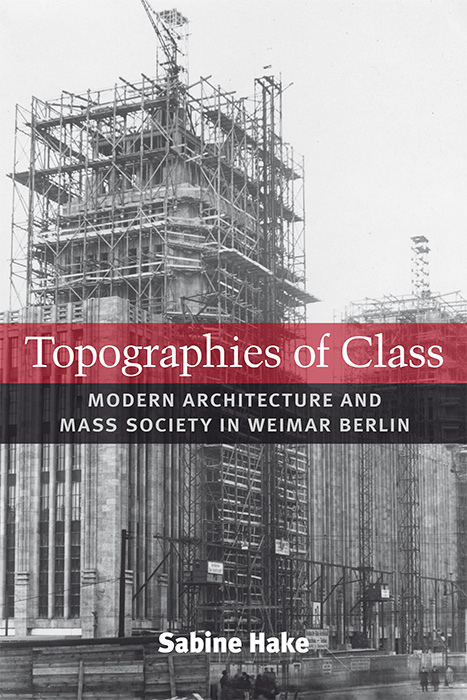
Topographies of Class: Urban Architecture and Mass Utopia in Weimar Berlin. Ann Arbor: University of Michigan Press, 2008. 336 pp. Link
A first attempt to address questions of class, this interdisciplinary study offers a new perspective on Weimar Berlin by reading architectural culture as a mediation between modernism, urbanism, and class analysis. With chapters on the work of Martin Wagner, Erich Mendelsohn, and Ludwig Hilberseimer, city essays by Siegfried Kracauer and Franz Hessel, popular photobooks on Weimar Berlin, and two canonical works, Walter Ruttmann’s Berlin, Symphony of a Big City and Alfred Döblin’s Berlin Alexanderplatz.
Beschreibung auf Deutsch lesen…
Als erster Annäherung an Klassenfragen bietet diese interdisziplinäre Studie eine neue Perspektive auf das Berlin der Weimarer Zeit, indem sie Architektur als eine Vermittlung zwischen Modernismus, Urbanismus und Klassenanalyse liest. Mit Kapiteln zu den Projekten von Martin Wagner, Erich Mendelsohn und Ludwig Hilberseimer, den Straßentexten von Siegfried Kracauer und Franz Hessel, den Fotobüchern über moderne Architektur in Berlin, und zwei kanonischen Werken, Walter Ruttmanns „Berlin, Sinfonie einer Großstadt“ und Alfred Döblins „Berlin Alexanderplatz“.
 Sabine Hake